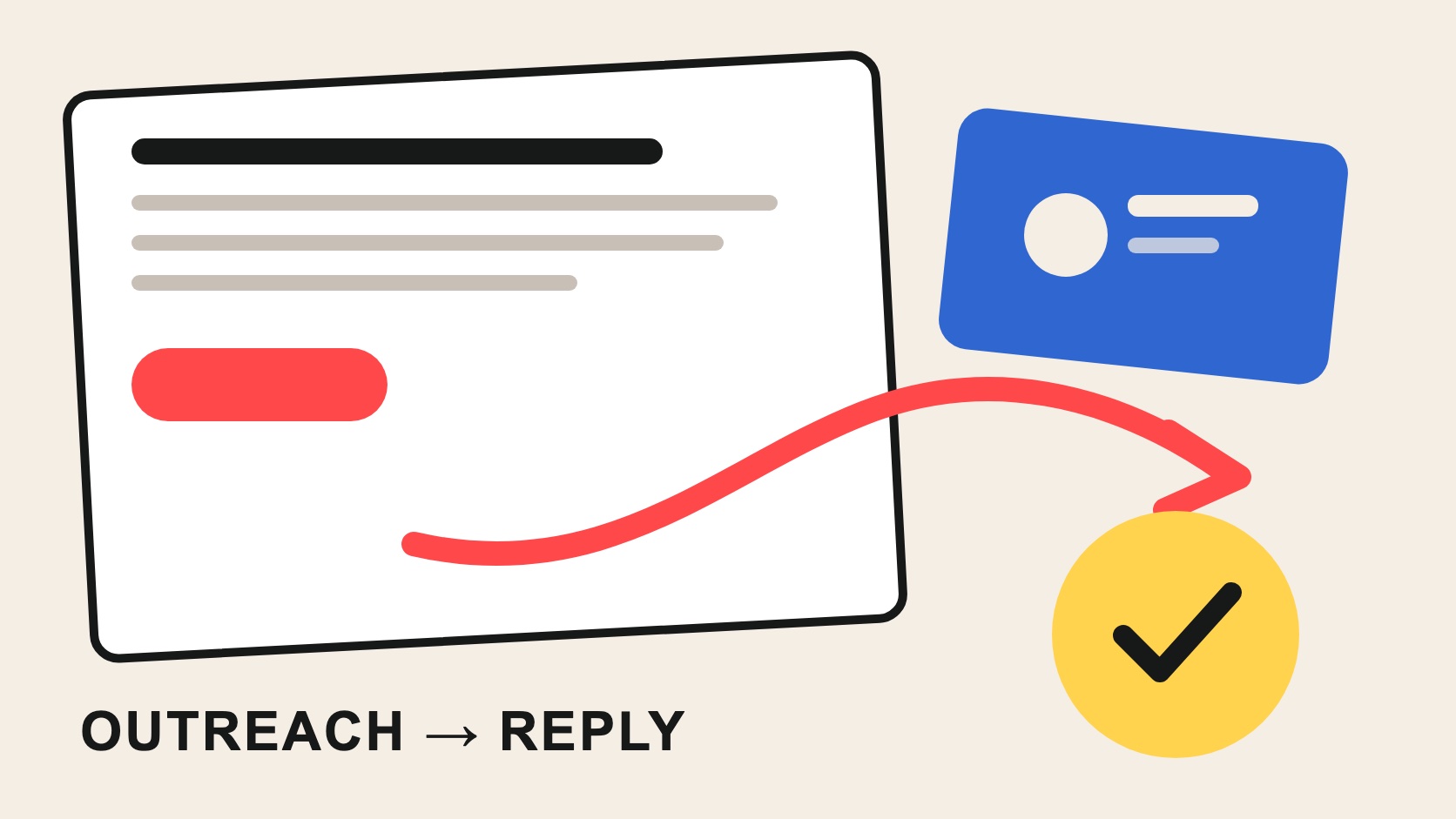
A strong influencer outreach email for SaaS should answer four questions quickly: why this creator, what the product does, what paid collaboration you are considering, and what response would move the conversation forward. Keep the first note specific and short. Do not hide the commercial purpose, attach a complete brief before interest exists, or ask for every audience field in the opening message.
The email is not the pitch deck. Its job is to earn a qualified reply from a creator who plausibly fits one defined campaign role. The IAB's creator-economy research identifies creator selection, measurement and operational consistency as buyer challenges. Outreach should therefore preserve the evidence behind selection and collect the information needed for the next decision rather than maximize reply volume at any cost.
Prepare the decision before writing the email
Write one sentence describing the creator's job: demonstrate a workflow to developers, introduce a new category to founders, produce short-form assets for paid testing, or translate a launch for one market. Record the relevant content that led to the shortlist. If the team cannot name the role and the evidence, the outreach will sound generic because the selection is generic.
Confirm the product is ready for the proposed collaboration. Prepare a public product link, a plain-language description, the target market, an indicative schedule and the intended deliverable type. Decide whether the initial message can mention an approved budget range. A range can save time when the scope is sufficiently defined; a false fixed price creates friction when rights, exclusivity or production effort are still unknown.
Use a concise first-contact structure
| Section | What to include | What to avoid |
|---|---|---|
| Subject | Brand or product, collaboration type and timing | Artificial urgency or vague “opportunity” language |
| Relevance | One specific piece of work and why it fits the role | Generic praise that could be sent to anyone |
| Product | One-sentence value and a verifiable link | Unapproved superlatives or a dense feature list |
| Scope | Indicative format, market, timing and paid status | Implying gifted access guarantees coverage |
| Reply | One clear request for interest, rates or the right contact | A long form before mutual fit is established |
A practical first note can read: “Hi [Name] — your recent [specific video or post] made [relevant idea] unusually clear. We are planning paid creator work for [product], a [plain-language description], aimed at [audience/market] around [timing]. We are considering [indicative deliverable] and would like to understand whether it fits your channel and current availability. If so, could you share the best contact and your current commercial information for this type of work?”
Adapt the wording to the creator's voice and contact channel. The useful elements are the evidence of fit, truthful product context, commercial clarity and a low-friction next step. Do not copy a compliment from the creator's bio or pretend to be a long-time viewer when the research does not support that claim.
Ask only for information that changes the next decision
After interest, request the information required to assess scope: relevant rate structure, recent comparable work, audience geography where material, delivery availability, revision terms, usage rights, paid amplification permissions, exclusivity and the contracting entity. Explain why sensitive audience information is relevant and accept an appropriate aggregated view rather than requesting personal viewer data.
Do not ask the creator to invent a full concept before commercial alignment unless a paid development step has been agreed. A short creative reaction can test enthusiasm and product fluency. A finished treatment is work. The vetting checklist covers evidence review, while the contract checklist covers the terms that should follow a qualified match.
Use a limited follow-up sequence
Send a polite follow-up only when the opportunity remains current. Add useful information, such as a clarified timeline or scope, instead of repeating the first email. A final close-the-loop note can release the creator from the thread and leave the door open for a better-fitting brief. More messages do not turn poor relevance into fit.
Track the contact date, channel, role, evidence of fit, response state, commercial notes and next action. Avoid reducing every non-response to a performance failure. The creator may be unavailable, the contact may be wrong, the product may not fit, or the message may lack enough clarity. Code those outcomes separately so the team fixes the actual constraint.
Keep claims and disclosure visible before contracting
Do not use outreach to promise claims the product team cannot substantiate. For US-facing endorsements, the FTC explains that advertisers have responsibilities for truthful claims, disclosure guidance and monitoring. Other markets have their own rules. Signal early that the work is sponsored and that product claims and applicable disclosures will be part of the brief.
Gifted access also needs accurate expectations. Sending a product or account does not create editorial obligation. If the brand requires a deliverable, agree the paid scope and terms. If the creator independently chooses to discuss something received for free, material-connection rules may still apply depending on the market.
Move the qualified reply into a structured handoff
Once there is mutual interest, replace the loose email thread with one current scope summary. State deliverables, platforms, timing, market, approval process, compensation, expenses, rights, amplification and exclusivity. Mark open questions. A clear handoff prevents the first friendly reply from becoming an accidental agreement with different assumptions on each side.
Use the creator brief guide after commercial fit, not as an unsolicited attachment. If rate expectations exceed the approved range, adjust scope, rights or timing before trying to negotiate the creator into an undefined discount. Photura's Creator Growth service can connect this outreach process to selection, contracting, production and reporting.
The best template is therefore a decision structure, not a magic paragraph: demonstrate relevance, state the paid opportunity honestly, ask for the next useful information and preserve what the team learns.
From decision to brief
Turn relevant outreach into a workable creator pipeline.
Photura can connect creator research, outreach, negotiation and campaign operations around the markets and product story you need to move.
Discuss your briefSources & references
- [1] IAB — 2025 Creator Economy Ad Spend & Strategy ReportResearch on how US creator-ad buyers plan, select and measure creator investment
- [2] FTC — Endorsement Guides: What People Are AskingUS staff guidance on truthful endorsements, material connections, claim substantiation and monitoring
- [3] Photura pricing reference — September 2026First-party indicative scope and pricing; the approved agreement controls
- [4] Photura selected workPublished campaign examples and reported campaign metrics; not universal benchmarks