
Influencer whitelisting is a broad industry term for running paid media through or with a creator identity; Spark Ads and partnership ads are named platform implementations with their own authorization flows. The commercial agreement and the platform permission are related, but they are not the same thing.
Teams often say “boosting” as if it were one action. In practice, the brand must decide which post, which identity, which account, which markets, how long, with what edits and under what reporting arrangement.
Separate the terms
| Term | What it generally means | Key decision |
|---|---|---|
| Whitelisting | Industry shorthand for creator-identity paid media | Exact platform, access and license |
| Spark Ads | TikTok ads using authorized organic posts | Post authorization and ad duration |
| Partnership ads | Meta ads using eligible partner content | Partner permission and placement setup |
| Brand-handle boosting | Paid media from the brand's own account | Whether creator identity is needed |
Platform names and interfaces can change. Use the current platform documentation during setup rather than relying on a generic contract phrase written for another channel.
Why brands amplify creator content
Paid amplification can extend a strong creator asset beyond organic distribution, add targeting and create more controlled test conditions. CreatorIQ's industry research identifies paid amplification as an important strategy, but performance still depends on the content, audience and offer. A creator face is not a substitute for a media hypothesis.
Permission in the platform is not the whole license
A creator may generate an authorization code or approve partner content inside a platform. The written agreement should still define content, territories, channels, duration, spend assumptions, editing, identity use and renewal. If the brand wants raw files, cutdowns or use outside the original platform, state those separately.
Read influencer usage rights explained before assuming organic publication includes paid media.
Use a controlled setup workflow
Agree the paid-use window before production. Confirm the platform account and post that will be authorized. Capture the approval without collecting unnecessary creator credentials. Test delivery in the intended market, record the start and end dates and remove access when the term ends.
Keep an asset-level log linking the agreement, post, authorization, campaign and renewal date. This prevents a media team from continuing spend after the commercial right expires.
Report organic and paid results separately
Separate original post performance from paid delivery. Report spend, paid impressions or views, clicks and conversion events with definitions. If the platform combines some engagement on the organic post, preserve the paid-campaign export as well. Do not credit the creator's organic audience with every paid impression purchased by the brand.
Photura's Creator Growth service includes paid boosting as a connected workstream. Use the contract checklist to align operational access with the underlying deal.
Use the platform definition, then write the commercial scope
TikTok says Spark Ads use authorized organic posts in advertising and provides account- and post-level authorization workflows.[1] Meta describes partnership ads as a way for advertisers to amplify content with a creator or other partner, subject to its eligibility and permission flow.[2] These tools establish platform access; they do not by themselves answer every question about fees, edits, territory, duration or off-platform use.
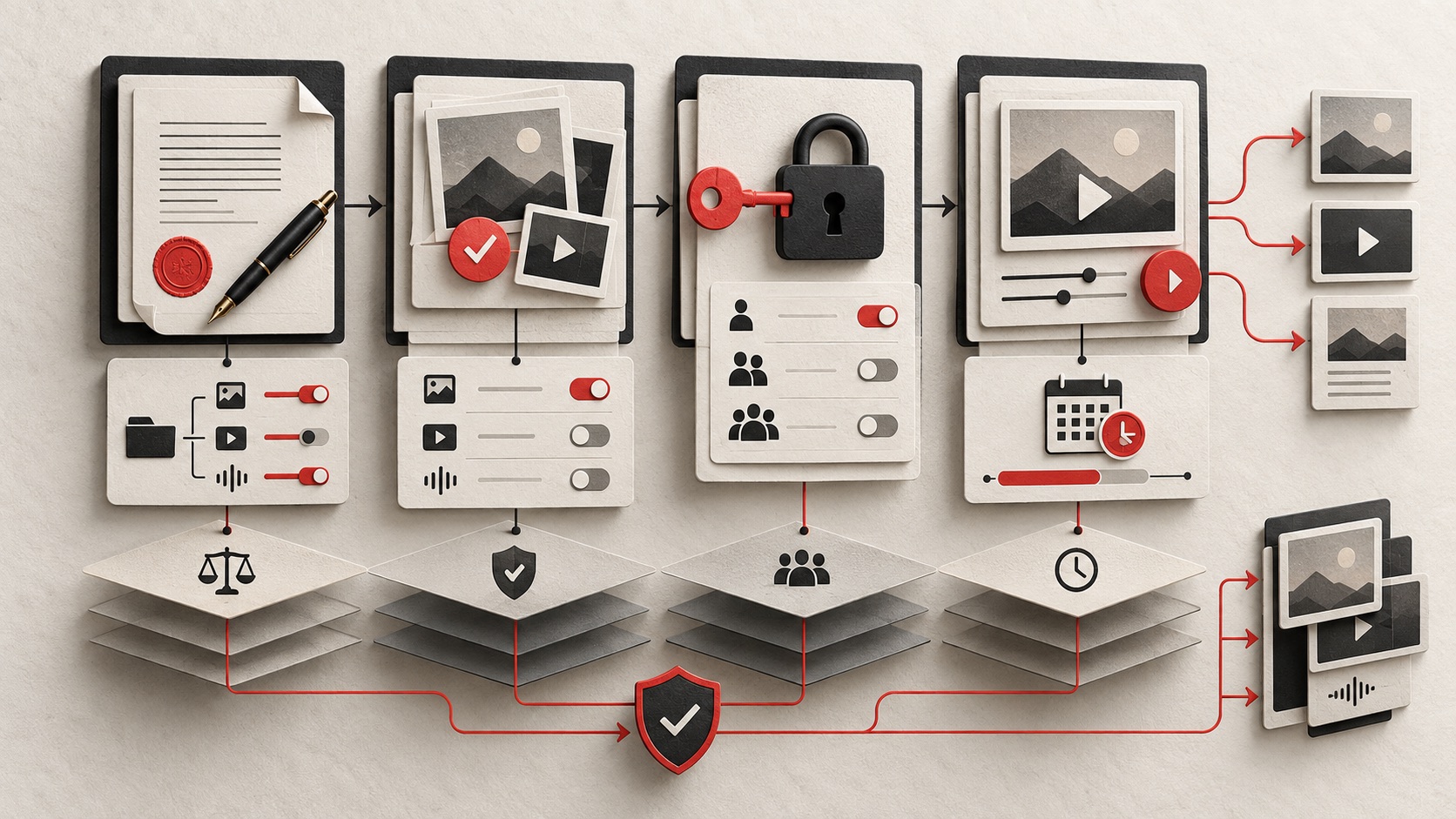
Think in a four-layer permission stack
| Layer | What it answers | Evidence to retain |
|---|---|---|
| Commercial agreement | What the creator licenses and for what compensation | Signed term, amendment or order |
| Content approval | Which specific asset and version can be used | Approved link or asset ID |
| Platform authorization | Which account can promote which post and for how long | Code, permission record and dates |
| Campaign setup | Where, to whom and with what spend the ad runs | Campaign export and targeting record |
A gap in any layer creates risk. A signed agreement without valid platform authorization cannot launch. Platform access without a defined paid-use license can create a commercial dispute. An authorized post used in an unapproved market may exceed the intended scope.
Questions to settle before pricing paid use
- Is the ad using the existing organic post, a dark variation, a raw file or an edited cutdown?
- Will it appear through the creator identity, the brand identity or both?
- Which platforms, accounts, countries and languages are included?
- What is the authorization and paid-use term, and when does it begin?
- Is there an expected or capped media-spend range?
- Can the brand change captions, hooks, thumbnails, calls to action or product claims?
- What reporting will the creator receive, and how will renewal be priced?
Do not ask creators to share personal passwords. Use current platform permission tools and least-privilege access. Record revocation steps and an owner responsible for ending access.
Paid creator media launch checklist
| Stage | Control | Owner |
|---|---|---|
| Before production | Paid use, identity, edit rights and disclosure agreed | Campaign and legal teams |
| Before publication | Final asset, caption, claims and relationship disclosure checked | Named approver |
| Before media | Authorization, dates, market, audience and tracking tested | Media owner |
| During media | Spend, comments, performance and brand-safety issues monitored | Media and community teams |
| At expiry | Campaign paused, permission removed or renewal documented | Rights owner |
Paid amplification does not erase disclosure duties
The FTC says an endorsement should make a material relationship obvious and that disclosures should be hard to miss and placed with the endorsement.[4] Platform labels may help but should be reviewed with the content and applicable requirements. Claims must remain truthful after editing; a cutdown can remove context that made the original statement accurate.
Optimize without confusing creator and media effects
Separate organic post results from paid delivery, and split creative, audience and spend changes in the log. If performance improves after targeting changes, do not attribute the full improvement to the creator. If a creator post earns strong organic attention but weak paid conversion, investigate landing-page fit, audience and offer before rejecting the asset.
CreatorIQ's current report says paid amplification strategies rank highly for ROI among respondents while investment is expanding.[3] The scalable practice is therefore governance: a rights ledger, asset-level reporting, defined renewal decisions and a clear end date for every authorization.
For each renewal, compare the remaining creative value with the new license cost and media plan. Pause expired campaigns first, then extend the commercial term and platform authorization together. That small control prevents a successful asset from becoming an accidental rights breach.
From decision to brief
Scope creator media before the post goes live.
Photura can connect creator production, permissions, usage windows and paid boosting in one campaign plan, with each right stated before media spend begins.
Discuss your briefSources & references
- [1] TikTok for Business — About Spark AdsOfficial description of promoting organic creator or brand posts as Spark Ads
- [2] Meta for Business — Reels ads and partnership contentOfficial guidance on creator marketplace, partner content and promoting existing Reels
- [3] CreatorIQ — State of Creator Marketing 2025–2026Industry research on investment, measurement, paid amplification and creator partnerships
- [4] FTC — Disclosures 101 for Social Media InfluencersUS guidance on material connections and clear disclosures