
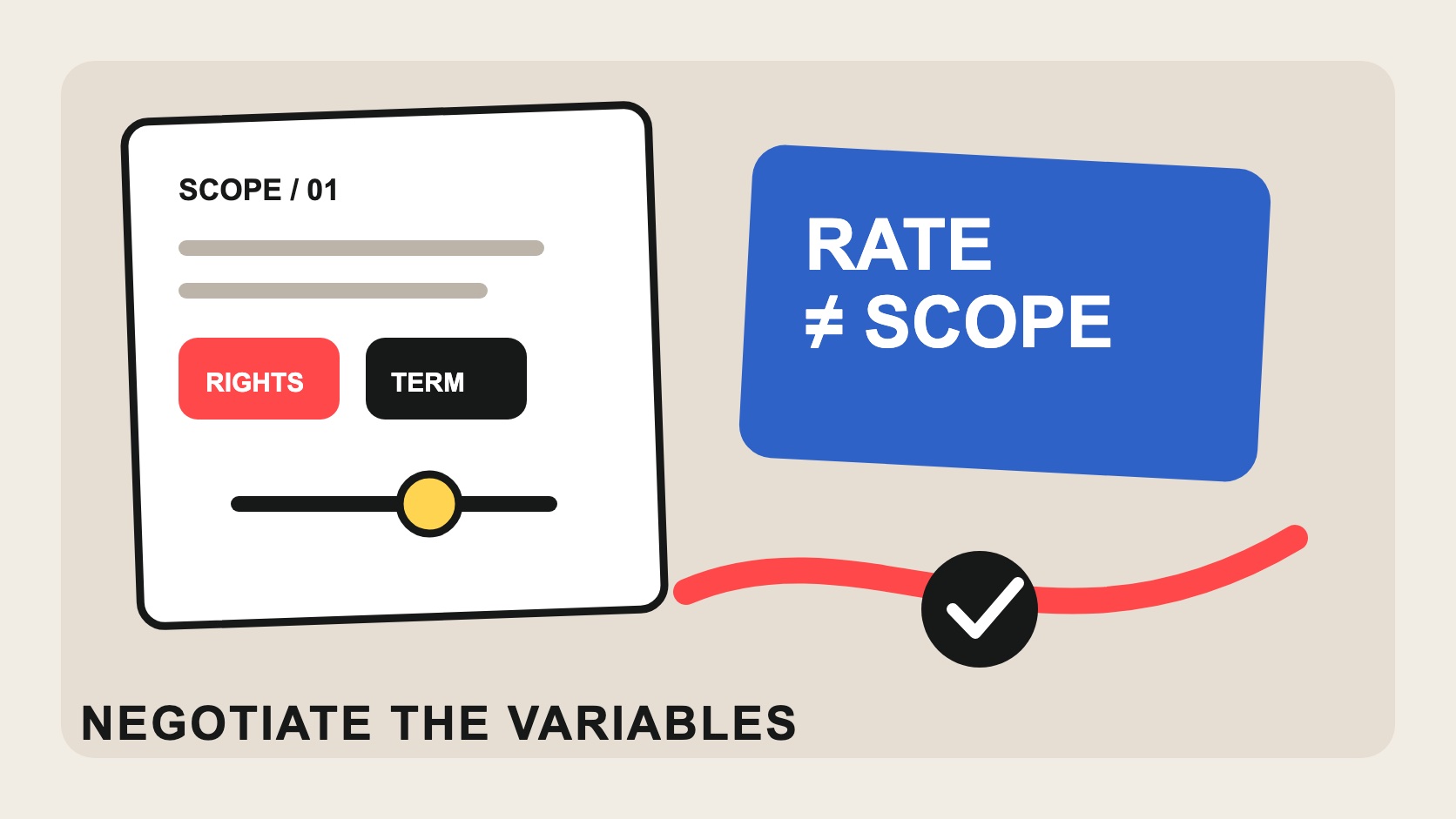
To negotiate influencer rates for SaaS, first make every quote describe the same job: deliverable, platform, production effort, timing, review process, usage rights, paid amplification and exclusivity. Then negotiate the variables that create cost instead of asking for an arbitrary discount. A lower fee attached to unclear rights or an unrealistic demo is not a saving; it is deferred risk.
Creator quotes are not interchangeable price tags. They can include access to an audience, creative labor, production, distribution, licensing and restrictions on future work. The useful question is not whether a creator is “expensive.” It is whether the proposed package is proportionate to the role the creator must perform and the evidence available for that decision.
Normalize the scope before comparing rates
Write a one-page commercial scope with the platform, format, approximate duration, product access, target market, delivery window, number of structured feedback rounds and required publication period. State whether the brand needs raw files, cutdowns, translations, organic reposting, paid media, creator-handle boosting or category exclusivity. Ask every shortlisted creator to quote against that same baseline and identify assumptions.
Do not compare a creator's organic publication fee with another creator's fee that includes twelve months of paid usage. Separate the base deliverable from optional rights and services. The IAB's creator-economy taxonomy illustrates how many distinct participants and services sit inside creator advertising; your commercial sheet should make the purchased components equally explicit.
Understand what is driving the quote
| Cost driver | Question to ask | Possible trade |
|---|---|---|
| Production | What research, filming, editing or specialist setup is required? | Simplify the format or provide approved product support |
| Distribution | Which channel, placement and publication period are included? | Change format or separate owned production from posting |
| Rights | Where, for how long and in which markets can the asset be used? | Shorten term, territory or channel scope |
| Exclusivity | Which competitors and product category are restricted? | Narrow the named set and duration |
| Timing | Does the schedule require priority or displaced work? | Move the flight or extend production time |
Ask for clarification without treating every difference as padding. A technical creator may need meaningful product testing before endorsing a SaaS workflow. A global deliverable may require extra captioning, language review or local rights. Conversely, a broad rights request copied from a master template may be unnecessary for a single organic launch.
Evaluate commercial value with relevant evidence
Use recent comparable content, audience-market fit, topic credibility, format performance, comment quality and the creator's ability to explain the product. Follower count alone does not describe likely delivery or buyer relevance. Request aggregated audience information only where it changes the decision, and distinguish creator-provided analytics from forecasts.
Build a planning range rather than a promise. For distribution work, document the view or reach assumption and its source. For production-only work, compare the asset's intended uses and replacement cost. For specialist B2B creators, value may come from trust with a narrow audience rather than mass reach. Published campaign examples can inform questions, but they do not guarantee another creator's outcome.
Trade scope variables in a clear order
If a quote exceeds the approved range, say which constraint is fixed and invite options. A useful response is: “The full package is above the current approval. Could you quote the organic deliverable separately, then price three months of paid usage as an option?” That protects the creator's base work while exposing the cost of the additional business use.
Trade low-priority rights before cutting the core idea. Reduce the number of deliverables, narrow territories, shorten the license, remove broad exclusivity, extend timing or separate production from distribution. Bundle only when the assets share real production work. Never imply future volume as compensation unless that volume is contractually committed.
Protect truthful experience and disclosure
The creator must have enough access to form the experience the content represents. Do not negotiate away testing time and then require a confident product recommendation. For US-facing work, the FTC says material connections include money, free products and other value, and disclosures should be hard to miss and placed with the endorsement. Other markets require their own review.
Compensation does not buy an invented opinion or an unsupported performance claim. Put approved claim boundaries and disclosure responsibilities in the brief and agreement. Allow creators to describe genuine limitations. Credibility is part of the asset; scripting it out can reduce both compliance and audience trust.
Turn the negotiated package into one agreement
Record the deliverables, schedule, approvals, fee, payment milestones, expenses, cancellation terms, disclosure, claim responsibility, usage, amplification, edits, exclusivity and reporting. Define what counts as a revision versus a new concept. Name the contracting entities and the process for delays caused by product access or late brand feedback.
Store optional prices beside the signed base scope so later requests do not become informal favors. Set rights-expiry reminders and remove paid assets when licenses end. The creator contract checklist covers the handoff, while the agency fee guide separates creator spend from program operations.
Judge the negotiation by clarity, not conquest
A successful negotiation gives both sides the same understanding of the work and preserves a credible path to delivery. Track why packages changed, which variables creators valued and whether actual production matched the assumptions. That record improves future scopes more than a spreadsheet of isolated headline fees.
Review the commercial outcome after publication. Compare the contracted scope with delivered files, revision effort, approval time, actual rights used and renewal demand. If the team repeatedly pays for broad rights it never activates, narrow the default. If late product access repeatedly creates rush fees, repair the operating process rather than blaming the creator's rate.
Keep rate information confidential where agreements require it and avoid using one creator's quote as leverage against another without permission. Market, audience, timing and rights make historical prices imperfect comparables. The goal of a rate database is to improve scope discipline and planning ranges, not to impose a universal price on different creative businesses.
Walk away when the product fit, claim requirements, audience evidence or working process cannot support the partnership—not simply because a creator resisted a discount. Photura's Creator Growth service can connect research, negotiation and campaign management when the program needs one accountable operating layer.
From decision to brief
Negotiate the scope, not just the number.
Photura can connect creator selection, commercial negotiation, rights and delivery into one accountable operating plan.
Discuss your briefSources & references
- [1] FTC — Disclosures 101 for Social Media InfluencersUS staff guidance on material connections, clear disclosure and truthful endorsements
- [2] IAB — Creator Economy Definitions and TaxonomyIndustry taxonomy for creator advertising participants, services and measurement
- [3] Photura pricing reference — September 2026First-party indicative scope and pricing; the approved agreement controls