
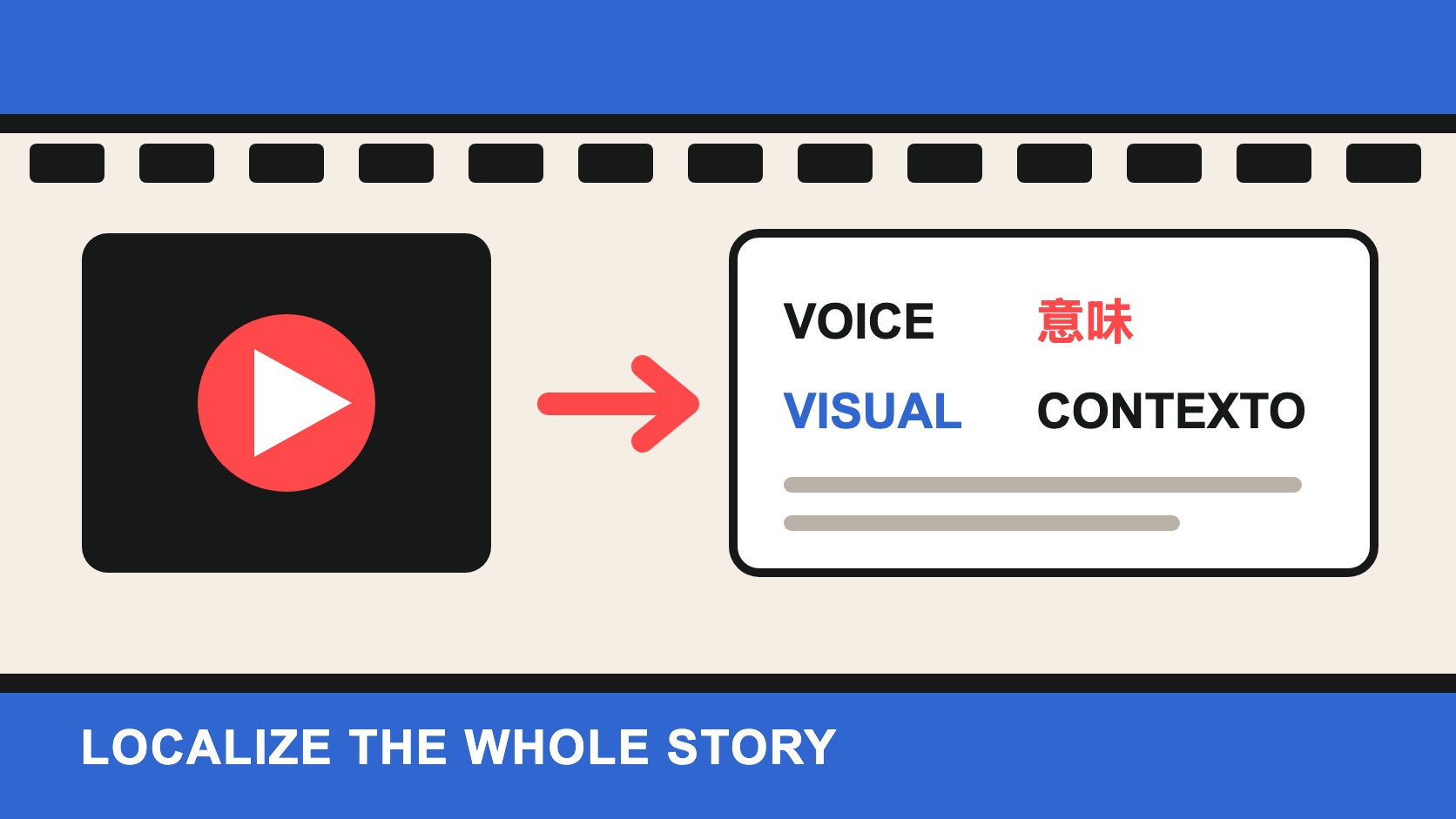
A SaaS video is localized only when the market can understand and trust the complete story: problem, product workflow, spoken and on-screen language, examples, claims, call to action, metadata and disclosure. Subtitles are one deliverable. Start with a market brief, decide what must be transcreated or reshot, and give a native reviewer authority over both language and commercial meaning.
A technically accurate translation can still fail when it preserves the wrong category term, pricing assumption, interface language or proof. Treat the source film as a system of editable layers. The earlier production plans for localization, the fewer compromises appear in graphics, pacing and rights.
Write a market localization brief
For each locale, define the audience, product availability, desired action, channel, buyer vocabulary, required claims, restricted claims and review owners. Record whether the product interface, support, pricing and sales process are actually available in that market. Do not publish a localized demand asset that sends viewers into an unsupported journey.
Separate language from region. Spanish for one market may require different examples, commercial terms or disclosure from another. Decide whether one language track can serve several regions and where distinct edits are necessary. Preserve unresolved product or legal questions instead of asking a translator to infer the answer.
Inventory every localizable layer
| Layer | Localization decision | QA owner |
|---|---|---|
| Story | Problem, category, example and proof relevance | Market lead |
| Voice | Subtitles, dubbing, reshoot or local creator | Producer and language reviewer |
| Visuals | Interface, captions, diagrams, dates and units | Product and design |
| Claims | Substantiation, qualification and disclosure | Claim owner and local counsel |
| Distribution | Title, description, thumbnail, landing page and CTA | Channel owner |
Create a source transcript with speaker, timecode, on-screen text and claim notes. Lock product names and terms that should not be translated. Give translators access to the product and video, not an isolated spreadsheet. A glossary should include approved category language, feature names, tone, capitalization and common mistranslations.
Choose subtitles, dubbing, reshoot or local creation
Subtitles are efficient when the source performance and examples travel well. Dubbing can preserve one visual master but needs pacing, pronunciation and mix review. A reshoot is appropriate when the presenter, product workflow or proof should be local. Local creator production may be strongest when audience trust and native use context matter more than global visual consistency.
Do not choose solely by unit cost. Consider comprehension, authenticity, platform behavior, production control, update frequency and rights. A feature tutorial that changes monthly needs a different system from a brand film expected to run for a year. Keep editable project files and textless masters when future markets are likely.
Use platform language features deliberately
YouTube says translated titles and descriptions can appear in search for viewers using those languages, while subtitles can help other-language viewers and accessibility. Its multi-language guidance supports additional audio tracks and, for eligible long-form videos, localized thumbnails. Availability can vary, so confirm the current channel controls before promising a workflow.
Set the source language correctly. Upload reviewed caption files and check timing, reading speed, line breaks, names and product terms. YouTube's caption workflow supports timed files, transcripts and manual entry. Automatic output is a starting point, not final quality assurance for product or claim language.
Design graphics for expansion and replacement
Keep essential on-screen copy editable and allow room for languages that expand. Avoid burning dense interface labels into footage when the product has localized screens. Capture clean product inserts that can be replaced without rebuilding the full edit. Check right-to-left layout and typography when applicable.
Localize units, dates, currency examples and keyboard conventions only when the underlying offer supports them. Review charts for reading order and color meaning. Never create a localized customer logo, quote or result that was not approved for that market and use.
Review claims and commercial disclosure in context
A translated claim must preserve its qualification and evidence boundary. Review voice, captions, graphics and demonstration together because their combined impression can change. For US-facing influencer content, the FTC says disclosure should be hard to miss and in the same language as the endorsement. Other markets have their own requirements.
Local counsel or qualified owners should confirm applicable advertising, privacy and sector rules. Do not assume a short disclosure approved in one market remains understandable after literal translation. Store approved disclosure wording by format and language with the relevant version.
Run linguistic, product and playback QA
Review the final export with native speakers who understand the product and intended audience. Check audio sync, pronunciation, subtitle timing, truncation, product screens, call-to-action destination and mobile readability. Test each platform upload rather than only the master file, because transcoding and UI overlays can change the experience.
Use a defect log with timecode, severity, owner and resolution. Distinguish factual errors from preference so the team does not destabilize approved language late in production. Obtain final sign-off on the exact file, caption track, metadata and thumbnail being published.
Measure markets separately and learn across them
Use consistent asset identifiers while preserving locale. Compare completion, qualified action and feedback within each market before ranking markets by surface engagement. A difference may reflect channel distribution, audience maturity or offer availability rather than translation quality.
Build a reusable localization memory from approved terms, pronunciations, subtitle decisions, claim qualifications and known market pitfalls. Version it with the product. A translation memory reduces inconsistency, but it should not override a native review when the product or audience context changes.
Plan updates before launch. Store textless masters, stems, caption sources, translated metadata, font licenses and project files with clear locale codes. When a feature changes, the team should be able to identify every affected version and update only the necessary layers rather than recreating or leaving stale videos live.
Retire versions visibly when the product, offer or rights expire. Remove them from active campaigns, update embeds and preserve an internal archive. A polished old video can keep generating demand long after its destination or feature promise becomes unavailable.
The international launch checklist covers the wider market system, and the creator-localization guide covers market selection and creator fit. Photura's Launch & Creative service can design a localization-ready master and market adaptations together.
From decision to brief
Localize the buyer's understanding, not only the words.
Photura can connect market insight, video adaptation, creator production and distribution into one localization system.
Discuss your briefSources & references
- [1] YouTube Help — Tools to translate your contentOfficial guidance on translated metadata, subtitles and captions
- [2] YouTube Help — Add multi-language features to your videosOfficial guidance on additional audio tracks, localized thumbnails and translated discovery
- [3] YouTube Help — Add subtitles and captionsOfficial workflow for uploading, synchronizing and publishing caption files
- [4] FTC — Disclosures 101 for Social Media InfluencersUS staff guidance on material connections, clear disclosure and truthful endorsements